
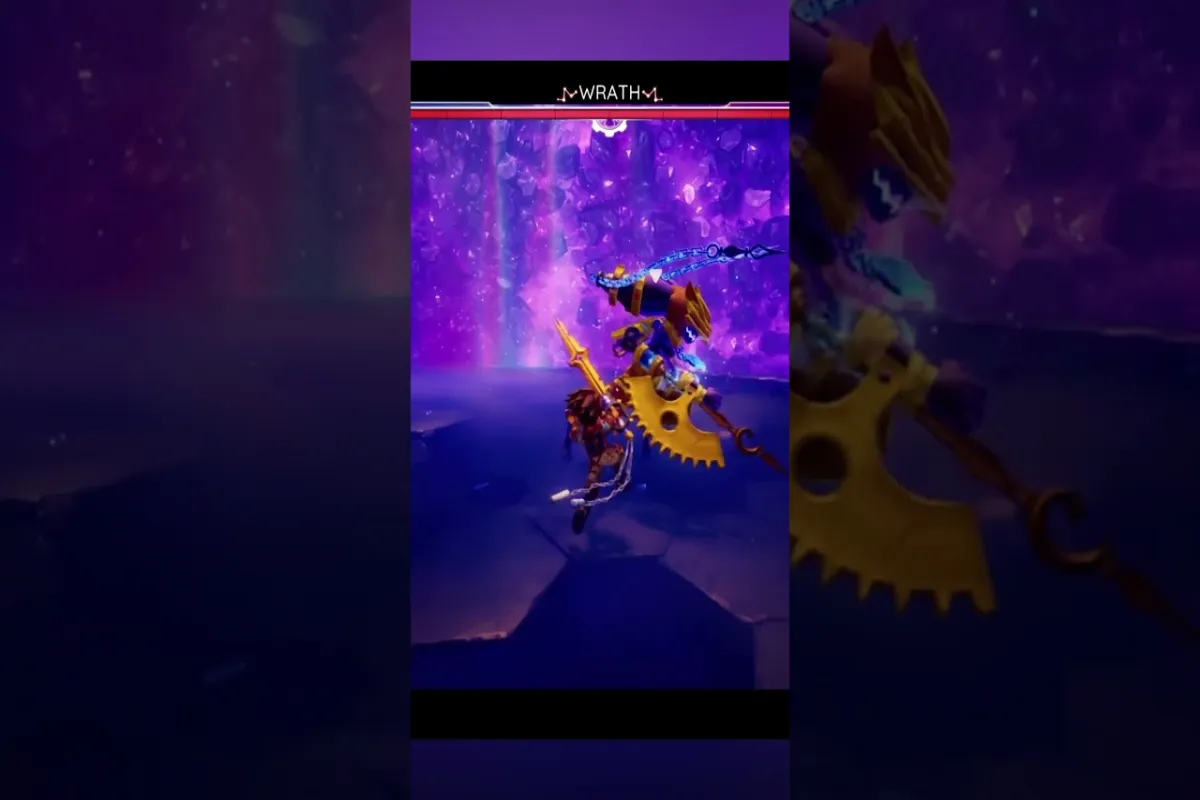
Understanding Duskfade's Combat System
Duskfade, the upcoming 3D action-platformer from Spanish indie studio Weird Beluga S.L., is built on a reactive, rhythm-based combat engine that rewards players who learn to read enemy telegraphs and execute defensive inputs at precisely the right moment. The game launches on August 13, 2026 for PC (Steam), PlayStation 5, Xbox Series X|S, and Nintendo Switch 2, powered by Unreal Engine 5, and it draws heavily from action-RPG classics while introducing its own layered timing system that fuses dodging, parrying, and a unique "time-stop" effect into a single fluid discipline.
Unlike many action-platformers where defense is treated as a fallback option, Duskfade perfect dodge timing is the cornerstone of high-level play. Every enemy in the game is tuned around specific input windows, and players who internalize those windows can convert defensive maneuvers into massive counterattack opportunities. If you are searching for a single skill that bridges beginner frustration and elite boss clear times, perfect dodge timing is the answer.
The Kingdom Hearts DNA
Many newcomers arriving at Duskfade do so because of the Kingdom Hearts comparison circulating across Reddit and YouTube. The comparison is accurate in spirit: Duskfade shares Kingdom Hearts' commitment to airborne combos, magic-flavored finishers, and a stance system that shifts between offensive and defensive postures. However, Duskfade distinguishes itself with a tighter timing curve and longer punishment for mistimed inputs. In Kingdom Hearts, a poorly timed dodge simply resets your combo; in Duskfade, a mistimed dodge can leave you open to a follow-up hit that staggers you into a longer recovery window.
This is why how to parry in Duskfade quickly becomes the most asked question on community forums. Players who come from action-RPG backgrounds instinctively reach for the parry button, but the game's defensive input map rewards a hybrid approach: you parry the first swing, dodge-roll the second, and then blast-attack during the recovery frames.
Why Timing Matters in Duskfade
Every defensive input in Duskfade exists on a strict frame timeline. The developers at Weird Beluga have publicly stated that the game's combat was tuned around a "one-frame shy of impossible" difficulty curve in its early prototype, then adjusted down to a more forgiving but still demanding window. Mastering that window is the difference between clearing a boss in three attempts and three hours.
The combat layer also feeds into the broader progression loop. Successful perfect dodges fill your Blast gauge, which is the resource that powers your most devastating finishers. Skip the timing discipline, and you are skipping the engine that drives the entire meta.
What Is Perfect Dodge Timing?
Duskfade perfect dodge timing refers to the narrow input window during which pressing the dodge button will trigger a "Perfect Dodge" — an enhanced dodge that briefly slows down time, grants invulnerability frames (i-frames), and allows the player to chain directly into a counterattack without recovery penalty. The window is roughly 6 frames at 60fps (about 100 milliseconds), which is generous compared to genre standards but still demands attention.
A standard dodge (called a Dodge Roll in the localization, or 回避ロール in the Japanese build) simply rolls the character out of harm's way with normal i-frames. A Perfect Dodge, by contrast, is visually distinct: the screen desaturates, a subtle chromatic aberration appears, and the dodge animation is shorter and snappier. The audio cue is a brief, high-pitched shimmer that overlay audio designers tuned to be audible even during chaotic multi-enemy encounters.
The Input Window Explained
The Perfect Dodge window is bracketed by two phases:
| Phase | Frame Range | Effect |
|---|---|---|
| Early Window | Frames 1–3 of enemy attack | Grants Perfect Dodge but no counter bonus |
| Optimal Window | Frames 4–6 of enemy attack | Grants Perfect Dodge + Blast gauge fill + time-slow |
| Late Window | Frames 7–9 of enemy attack | Treated as normal dodge, no bonus |
Note the asymmetry: an early input is still rewarded with the Perfect Dodge animation and i-frames, but only the optimal window fills your Blast gauge and triggers the time-stop effect. This design encourages aggressive play — better to commit slightly early than to hesitate and lose the bonus entirely.
Time-Stop Roll Mechanics
The time-stop roll, listed as Time-Stop Roll in the multilingual combat glossary (Zeitstopp-Rolle in German, 時間停止ロール in Japanese, 시간 정지 구르기 in Korean), is what experienced players actually mean when they talk about "perfect dodge timing." During this state, all enemy animations freeze for roughly 0.25 seconds while your character remains at normal speed. This is your opportunity to reposition, line up a Blast Attack, or simply confirm your counter hitbox.
The time-stop effect does not pause particle effects, environmental hazards, or other players in co-op. It only freezes enemies directly affected by your dodge. This nuance becomes critical during multi-enemy encounters where one elite enemy can trigger time-stop while three grunts continue their swing patterns uninterrupted.
How to Parry in Duskfade
The Duskfade parry system operates on a similar but distinctly different timing curve. Where the dodge rewards the player for committing to a roll, the parry rewards the player for holding ground. Parry inputs use a dedicated button (default: LB/L1/LT on console, F on keyboard) and, when timed correctly, deflect an incoming melee strike and stagger the attacker.
The Parry Window vs Perfect Dodge
The parry window is shorter than the perfect dodge window — roughly 3 frames at 60fps — but it offers a stronger payoff: a staggered enemy takes 1.5x damage from your next attack and is locked out of their follow-up combo for 2 full seconds. Against elite enemies and bosses, that stagger window is often the only opening where you can land more than one or two hits safely.
| Action | Window Length | Best Use Case |
|---|---|---|
| Perfect Dodge | ~6 frames | AoE-heavy enemies, multi-hit chains, repositioning |
| Parry | ~3 frames | High-damage single strikes, elite enemy openers |
| Block | Continuous | Trash mobs, exploring dangerous rooms without combat focus |
The trade-off is clear: parrying is riskier but more rewarding, while perfect dodging is safer and more versatile. Most high-level players use both in the same encounter, often within the same combo sequence.
Visual and Audio Cues
Parry timing is communicated through the same audio language as perfect dodge, but with one critical difference: the shimmer tone is louder and lower-pitched, designed to cut through the audio mix of the incoming attack. The visual cue is a brief white flash on the attacking enemy's weapon approximately 4 frames before the strike connects. Players who play with sound off will struggle — Duskfade is designed with audio-first feedback, and the developers have confirmed that colorblind-friendly visual cues are layered on top of the audio, not in place of it.
A common beginner mistake is to treat the white flash as the parry trigger. It is not — the flash marks the start of the active strike frames. By the time you see the flash, you are already inside the parry window. Train yourself to react to the audio cue, and the visual cues become confirmation rather than triggers.
Enemy Attack Patterns You Must Master
Understanding perfect dodge timing in isolation is only half the battle. The other half is recognizing which attack is coming and choosing between parry and dodge accordingly. Duskfade categorizes enemies into three broad behavioral tiers, each with distinct timing signatures.
Standard Enemy Patterns
The most common grunts in Duskfade follow a predictable three-step pattern: wind-up → strike → recovery. The wind-up animation lasts roughly 18 frames, the strike 6 frames, and the recovery 24 frames. Your perfect dodge input should land within the strike frames, which is also when your parry window opens.
| Enemy Type | Wind-up | Strike Frames | Recovery | Recommended Response |
|---|---|---|---|---|
| Hollow Shade (early game) | 18f | 6f | 24f | Perfect Dodge |
| Twilight Sentry (mid game) | 14f | 4f | 18f | Parry → Blast Attack |
| Void Weaver (elite) | 22f | 8f | 30f | Dodge first strike, Parry second |
| Boss Phase 1 | Variable | Variable | Variable | Pattern recognition required |
Elite Enemy Attack Chains
Elite enemies introduce multi-hit chains that test both your timing and your ability to chain defensive inputs. A typical elite combo opens with a slow, parryable overhead strike, follows with two fast horizontal swings that demand perfect dodges, and finishes with a heavy slam that can either be parried or dodged depending on your Blast gauge state.
The rule of thumb for elite encounters: parry the first strike, dodge the chain, punish the recovery. Deviating from this pattern is usually what gets high-level players killed, because each elite has a "tell" hidden inside their opening strike that telegraphs the entire chain. Miss the first parry, and you often miss the rhythm of the whole fight.
Boss Phase Transitions
Boss fights in Duskfade are divided into phases, and each phase changes the timing curve. Phase 1 is generally tutorialized — the boss telegraphs heavily and gives generous windows. Phase 2 tightens the windows by roughly 30%. Phase 3 (the "duskfade" phase that gives the game its name) tightens further and introduces new attack types that did not appear in earlier phases.
Players who learned perfect dodge timing on a Phase 1 boss often feel blindsided by Phase 3. The solution is to treat each phase transition as a fresh learning cycle. Reset your timing expectations, observe the new telegraphs, and rebuild your defensive rhythm from scratch.
Common Mistakes and How to Fix Them
Even experienced action-game players fall into recognizable traps when they first pick up Duskfade. The game's timing curve is unusual enough that muscle memory from other games actively works against you.
Panic Rolling
The single most common mistake is panic rolling — mashing the dodge button whenever an enemy telegraphs an attack. This almost never triggers a Perfect Dodge, because the input window is too narrow for spam input. Worse, panic rolling depletes your stamina (Duskfade has a light stamina system tied to defensive actions) and leaves you without a dodge when you actually need it.
The fix is counter-intuitive: delay your first dodge input by half a second. Most panic-rolling players commit too early. Trust the telegraph, wait for the audio cue, then input the dodge. The result is a higher rate of Perfect Dodges and lower stamina consumption.
Greedy Dodging
The opposite mistake is greedy dodging — holding back on defensive inputs to squeeze in an extra hit. This is especially tempting when your Blast gauge is high and you can see a finish incoming. But Duskfade punishes greed harshly: a single hit of contact during an enemy strike window cancels your combo entirely and applies a brief stagger debuff.
Discipline your combo count. Most optimal combos cap at 3–4 hits before a defensive input is required. If you find yourself chaining 6+ hits without dodging, you are gambling.
Camera Positioning Errors
Duskfade's camera is a frequent source of failed defensive inputs, particularly against enemies that attack from off-screen. The game uses a dynamic over-the-shoulder camera that follows your character rather than your reticle, which means enemies approaching from the right side of the screen are often fully visible while enemies from the left are partially obscured.
Solution: manually nudge the camera with the right stick during enemy telegraphs. The camera reset in Duskfade is fast and forgiving — a quarter-turn is all you need to recenter the threat. Players who leave the camera on auto-resolve during combat are giving up information that the timing system depends on.
Advanced Tips and Frame Data
Once you have the basics down, the next step is frame-perfect optimization. This is the difference between clearing a boss fight with 30% health remaining and clearing it unscathed.
Input Buffer Optimization
Duskfade includes a generous input buffer that queues your next defensive action during the final frames of your current attack. The buffer is 8 frames long, which means you can input your dodge during the recovery of your last hit and have it execute at the earliest valid moment. High-level players use this buffer to "pre-load" their dodge before the enemy even telegraphs, dramatically tightening their timing window.
The trick is calibration: every weapon has a slightly different recovery animation, which means the buffer timing shifts. Spend time in the training room (accessible from any save point) with each of your main weapons and learn their buffer offsets.
Combo Extensions After Perfect Dodge
A Perfect Dodge into time-stop opens up a unique combo path: the Blast Attack chain. During the time-stop window, you can input a fully charged Blast Attack that lands during the enemy's recovery frames. If you chain this with a second Perfect Dodge on their retaliatory strike, you can loop into a continuous blast combo that fills your Blast gauge in roughly 12 seconds.
This is the core of Duskfade's speedrunning and boss-rush meta. Players optimizing for fast clear times are essentially performing a frame-perfect chain of dodges, blasts, and repositioning inputs. It looks chaotic but is governed by strict timing rules. For more on the broader combat layer, see our combat system explained and combat mechanics guide pages.
If you are just starting out and want a softer onboarding, our combat tips for beginners guide is the better entry point. For veteran players looking to push their execution further, the advanced combat tips article covers optimization at a deeper level.
For the official Steam store page with system requirements and pre-order information, visit the Duskfade Steam listing.
Frequently Asked Questions
What is the exact input window for Duskfade perfect dodge timing? The perfect dodge window spans approximately 6 frames at 60fps (roughly 100ms), with the optimal Blast-gauge-filling window contained within the middle 3 frames. The earliest 3 frames still trigger the Perfect Dodge animation but do not fill your Blast gauge.
Can I parry every attack in Duskfade, or are some attacks undodgeable? Most attacks can be parried, dodged, or blocked, but boss attacks in Phase 3 sometimes include an "unstoppable" yellow-telegraph strike that must be dodged. Attempting to parry an unstoppable strike results in a stagger and significant damage.
Is parrying better than perfect dodging in Duskfade? Neither is universally better — parrying grants higher damage windows but has a tighter timing curve and shorter range. Most experienced players use both within the same encounter, parrying opening strikes and dodging chains.
Does the perfect dodge window change between enemies? Yes. Elite enemies and bosses have shorter optimal windows than standard grunts. The 6-frame window is a baseline; expect it to shrink to roughly 4 frames against Phase 3 bosses.
What controller or keyboard layout is best for learning the timing? Keyboard players should map dodge to spacebar for the fastest possible input. Console players should keep the dodge button on a shoulder trigger rather than a face button, because trigger actuation is faster and allows for analog-input partial presses that can help with timing calibration.