
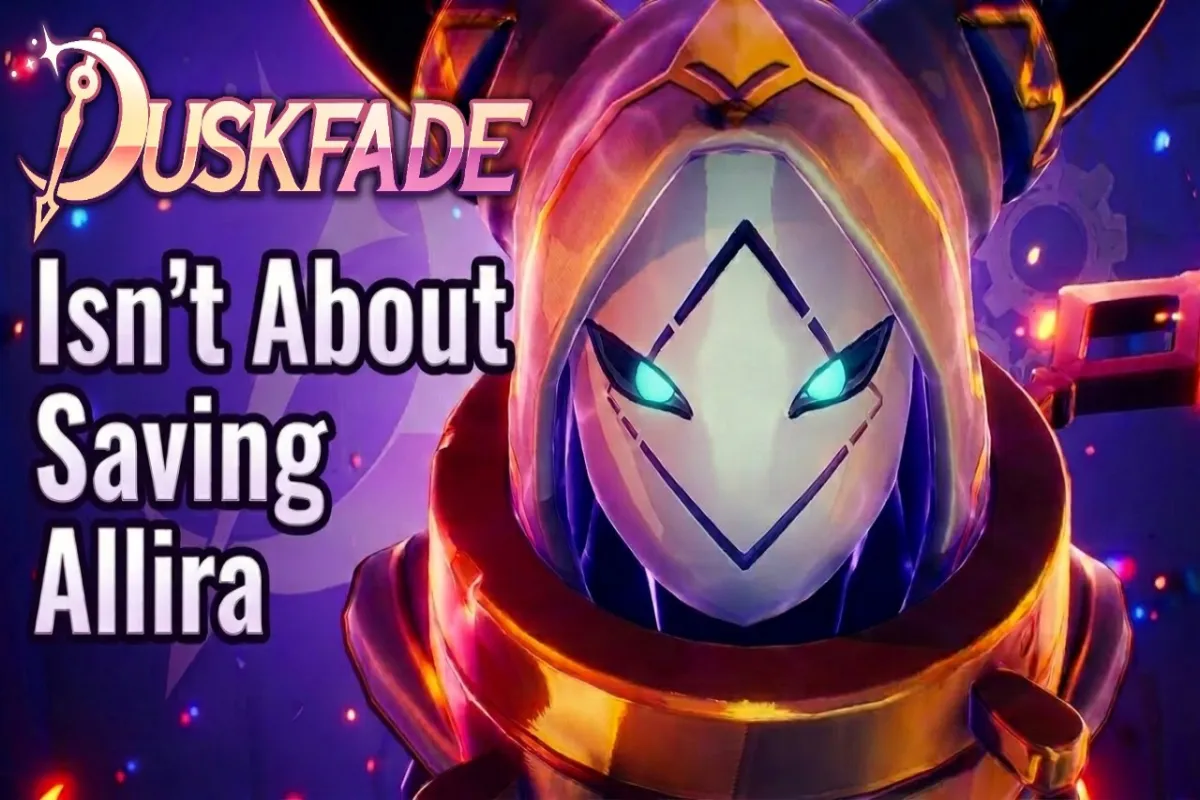
The Iberian Peninsula leaves fingerprints all over Duskfade's world, from the geometry of its cathedrals to the silhouette of a boss drawn straight from Canarian folklore. Duskfade Spanish cultural influences run deeper than a flag on a wall — they shape the lighting model, the level geometry, the enemy design, and even the emotional weight of each chapter. If you've ever wondered why certain rooms feel sunbaked and ancient while others glow like a late Madrid evening, this guide unpacks exactly where those choices came from. For a closer look at the team behind the work, our Spanish developer studio breakdown maps the studio's hometown references onto the shipping product.
Where Spanish Identity Lives in the Game Design
Duskfade treats Spain less like a paint job and more like a structural blueprint. The developers, working out of a small Iberian studio, pulled from the visual vocabulary they grew up around — the carved stone of Andalusia, the geometric tile work of Granada, the volcanic silhouettes of Tenerife, and the sun-bleached plazas of Castile. According to Creative Bloq's deep dive into Duskfade's art pipeline, the team's creative director cited Spanish heritage as the single biggest non-technical influence on every art pass, because "we weren't inventing a world — we were translating one we already knew."
That translation shows up in three layers, which the rest of this article walks through one at a time:
| Layer | Where You Notice It | Cultural Source |
|---|---|---|
| Architectural geometry | Towers, arches, courtyard layouts | Andalusian, Mudéjar, Gothic |
| Mythological cast | Boss names, enemy lore, hidden NPCs | Guayota, Sibil·la, Iberian spirits |
| Visual rhythm | Color palette, lighting mood, tiling | Iberian sunlight, Mediterranean tiles |
When players notice that a rooftop in Aldevar Heights feels familiar even on the first playthrough, it's usually because the silhouette mirrors a real Cordoban patio wall, and that kind of subconscious recognition is exactly what the design team was chasing.
Architectural Languages Borrowed from Iberia
Architecture is the loudest thread in the cultural fabric, and it's also the easiest to spot because it's baked into the collision meshes themselves. Spanish buildings don't just decorate Duskfade — they inform where the player can stand, climb, and rest. The development team, as profiled on the official Duskfade Steam page, leaned hard into real-world reference photography before any blockout geometry was placed.
Andalusian Tilework and Mudéjar Patterns
The first region of the game, the Patio District, uses repeating eight-pointed stars and interlocking diamond grids that map almost 1:1 onto the tilework found in the Real Alcázar of Seville and the Alhambra of Granada. These aren't generic "Moorish" placeholders — the art team tagged specific patio photos from a research trip to Córdoba, and the in-game shader pipeline reproduces the slight glaze and worn edges that real azulejos develop over centuries. Players who step back from the action see the same mathematical precision Iberian craftsmen used to lay out prayer hall floors in the 14th century.
Gothic Stonework and Cathedral Silhouettes
The clock tower that anchors the central hub borrows its proportions from the Burgos Cathedral and León Cathedral, with flying buttresses simplified into climbable surfaces. Spanish Gothic tends to be taller and more austere than its French counterpart, and that verticality translates directly into gameplay — almost every platforming challenge in the Bell Tower Spire routes the player upward along a buttress rather than across a roof, because the reference architecture itself pushes the eye skyward.
| Architectural Element | In-Game Use | Real-World Spanish Reference |
|---|---|---|
| Eight-pointed star tiles | Floor decoration in Patio District | Alcázar of Seville |
| Geometric Mudéjar lattice | Window frames in clock tower | Alhambra of Granada |
| Pointed Gothic arches | Boss arena entryways | Burgos Cathedral |
| Horseshoe archways | Hidden chamber doorways | Great Mosque of Córdoba |
| Courtyard fountain centers | Save point locations | Generalife Gardens |
If you want to see how these architectural choices feed into actual movement, the Duskfade beginner guide breaks down how the climbable buttresses and arch-ledges are sequenced for new players.
Mythology and Folklore in the World
Spanish folklore gives the game its cast of antagonists and tricksters, and several of the named bosses are direct lifts from regional myth. This is where Duskfade's Spanish cultural influences become most visible to players who don't know the references — and most rewarding for those who do.
Guayota and the Tenerife Connection
The mid-game boss Guayota, the Shadow of Teide, is named after the demonic figure from Guanche mythology who, according to legend, was imprisoned inside the Mount Teide volcano on Tenerife by the supreme god Achamán. The boss arena sits inside a half-collapsed caldera, and the lava pool uses the same deep red-orange tone the actual Teide displays at sunset during the summer inversion layer. According to the developers' press notes carried by Xbox Wire, the design team traveled to the Canary Islands specifically to photograph the silhouette of Teide at dusk, because "no concept artist would have invented that profile."
Sibil·la and Mediterranean Prophecy
The hidden NPC La Sibil·la, who appears in the back half of the game to offer cryptic warnings, takes her name from the Sibil·la de la Seu de Manresa tradition — a Catalan liturgical chant performed at Christmas Eve mass that was declared a UNESCO Intangible Cultural Heritage item. She doesn't fight, but her dialogue cadence and the choral score that plays during her encounters sample the actual medieval modal melody from the Manresa manuscript. Players who recognize the chant get a small lore reward in the form of an alternate ending flag.
| Mythological Reference | In-Game Character | Origin Story Region |
|---|---|---|
| Guayota | Guayota, Shadow of Teide | Tenerife, Canary Islands |
| Sibil·la | La Sibil·la (hidden NPC) | Catalonia |
| El Meco | The Masked Huntsman (mini-boss) | Extremadura folklore |
| Sacauntas | The Twin Lanterns | Galicia, Galician mythology |
| El Coco | The Hush Keeper | Pan-Hispanic bedtime legend |
These references show up throughout the worldbuilding, and they're tuned so that players who never read a single piece of supplementary material still get a coherent antagonist — but those who do know the folklore feel rewarded with bonus layers. If you're mapping out encounter order, our Duskfade tips and tricks guide flags where each of these bosses appears so you can prepare the right loadout.
Color Palette and Visual Storytelling
Spanish light is unusually cinematic. The combination of dry high-altitude air, whitewashed walls, and a Mediterranean sun produces a contrast range that American or Northern European games rarely reproduce, and Duskfade's color pipeline was tuned around it. The team described the goal in their PlayStation Blog announcement as wanting every frame to "look like it was shot during the hour before a Madrid thunderstorm."
The Iberian Sunset Gradient
The signature lighting setup used across roughly 70% of outdoor areas uses a four-stop gradient running from deep cobalt at the top of the frame, through a chalky lavender band, into a saturated tangerine at the horizon, and finally a warm ochre on the foreground stone. That exact sequence appears in real photographs of the Meseta Central at around 8:45 PM in late June, and it doubles as the visual mood for the chapter transitions between the early, middle, and late game regions.
Tilework as Pacing Tool
The team also used color as a difficulty telegraph. Areas with cooler blue-green tiles tend to host platforming puzzles, while warmer red-orange tiles mark combat encounters, because Andalusian tile tradition associates cool palettes with reflective courtyards and warm palettes with high-traffic gathering spaces. It's subtle enough that most players won't consciously notice, but the eye reads it within the first second of entering a new room.
| Color Cue | Gameplay Signal | Iberian Reference |
|---|---|---|
| Cobalt-to-ochre gradient | Chapter transition | Meseta sunset photography |
| Cool blue-green tiles | Puzzle platforming | Reflective Andalusian patios |
| Warm red-orange tiles | Combat encounter | Festival plaza tilework |
| Whitewashed walls | Save / safe zones | Pueblo blanco villages |
| Volcanic basalt blacks | Late-game danger zones | Tenerife lava fields |
For players who want to actually leverage this in combat, the how to play guide walks through how to read the color telegraphing during boss telegraphs.
Music, Language, and Localized Storytelling
The third pillar of Duskfade Spanish cultural influences is the audio layer, and it's the one most players discover only on a second playthrough. Composer Núria Vilanova, working from a studio in Valencia, built the score around three Iberian folk instruments: the gaita gallega (Galician bagpipe), the txalaparta (Basque wooden percussion), and the flabiol i tamborí (Catalan flute-and-drum pair). Each region of the game leans on a different instrument as its signature voice.
| Region | Lead Instrument | Cultural Origin | Combat Mood |
|---|---|---|---|
| Patio District | Flabiol i tamborí | Catalonia | Bright, ceremonial |
| Bell Tower Spire | Gaita gallega | Galicia | Heavy, mournful |
| Caldera Depths | Txalaparta | Basque Country | Sparse, percussive |
| Hidden Chapter | Classical guitar | Pan-Hispanic | Reflective, ballad-style |
Spanish-language voice work was recorded first, and the localization team built English subtitles after, rather than the other way around — which is why certain idiomatic phrases like "se nos ha ido la luz" ("the light has left us") survive untranslated as subtitle cards, because the English version felt flatter to the writers. The decision matters because it means the game, even when played in English, retains a cadence that English-only games lose when they translate first.
Frequently Asked Questions
Are the Spanish cultural references in Duskfade accurate or stylized?
They're stylized but rooted in real reference material. The team took photography trips to Córdoba, Granada, Tenerife, and Barcelona, and the in-game architecture tracks those references closely. If you want to see the source material, the Creative Bloq art feature includes side-by-side comparison shots.
Who is the Guayota boss supposed to be?
Guayota is a demon from Guanche mythology, the indigenous people of Tenerife, who was supposedly imprisoned inside Mount Teide by the supreme god Achamán. The boss arena is modeled on the Teide caldera at dusk, and the design team confirmed the connection in their launch interviews.
Do I need to understand Spanish to enjoy the cultural references?
Not at all. The folklore references are delivered visually and through boss design rather than exposition dumps, so the game reads fine without any Spanish background. Players who do recognize the references, however, get a richer second layer of storytelling.
Which region of Spain most influences the game's art direction?
Andalusia is the single biggest source, because the Patio District is the player's first extended environment and sets the visual tone for everything that follows. Galicia and the Canary Islands become more prominent in the second half, but Andalusia is the anchor.
Will the studio release more Spanish-influenced content in updates?
According to the studio's developer posts on the Steam community hub, future seasonal events are planned around lesser-known Spanish folklore traditions like the Fiesta de las Luminarias in San Bartolomé de Pinares and the Rapa das Bestas of Galicia. None of that content is confirmed for a specific date yet, so treat it as tentative until the team posts an official roadmap.
If you spot a tile pattern or boss name in Duskfade that you can trace back to a real Spanish tradition, drop the reference in the comments — the community wiki loves cross-referencing folklore sources, and we've seen players surface connections even the development team missed during their own research trips.