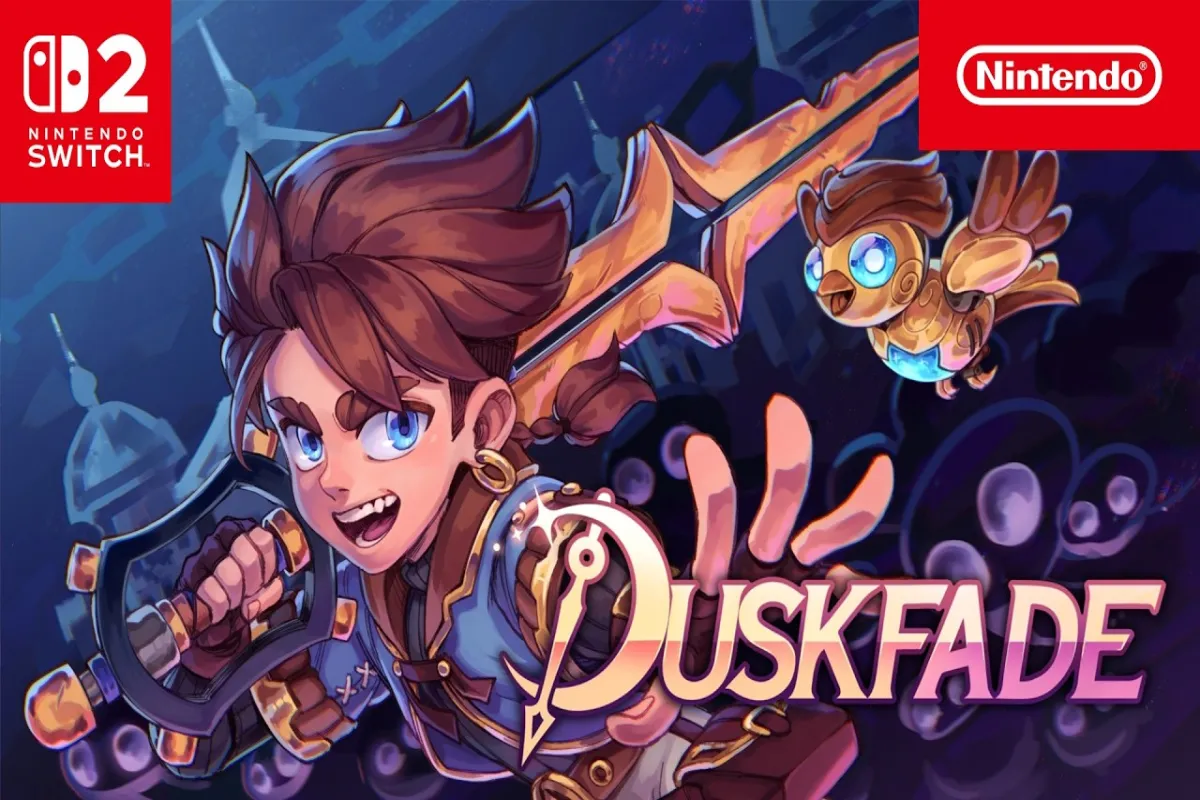
When players boot up Duskfade on launch day, the studio name flashing across the splash screen is Weird Beluga S.L., a small but ambitious Spanish independent team. The Duskfade developer Weird Beluga represents a growing wave of European indie studios betting on nostalgia-driven, mechanically tight action-platformers rather than live-service giants, and according to community data, that bet has already paid off in critical goodwill. This profile covers the studio's identity, the people behind the project, the design philosophy that shaped Zirian's clockwork adventure, and the roadmap that brings the game to consoles and PC on August 13, 2026.
Get the full story behind the team that made the world's gears turn again.
Who Is Weird Beluga? The Studio Behind Duskfade
Weird Beluga is a Spanish independent game studio founded by developers who cut their teeth on classics like Jak and Daxter, Banjo-Kazooie, and Psychonauts. The studio operates under the legal entity Weird Beluga S.L. and is responsible for Duskfade, a 3D action-platformer launching on PC, PlayStation 5, Xbox Series X|S, and Nintendo Switch 2 on August 13, 2026. What separates this Spanish developer from the larger pack is a self-imposed constraint that runs through every internal review meeting: every mechanic must serve the fantasy of being a young hero in a clockwork-infested world, with no microtransactions, no battle pass, and no filler content to pad the runtime.
The studio's official Steam listing frames the experience around the Minutero sword, the Cuckoo companion, and a hub world called Tick Town that branches into zones such as Howling Geode, Stonetusk Canyon, and Starstone Mines. That single-page description, deliberately short by modern marketing standards, has become a talking point among fans because it refuses to overpromise. The team has repeatedly told outlets that they would rather ship a focused ten-hour campaign than a bloated open world, and the public reveal timeline from April 2025 onward has stayed consistent with that ethos.
Studio Identity and Location
The Duskfade developer Weird Beluga operates out of Spain, drawing on a regional indie scene that has produced international hits like Blasphemous, RiME, and the Rime-adjacent Somerville. The studio's Spanish roots show in subtle design touches — character naming conventions drawn from Iberian folklore, environmental lighting that echoes Mediterranean afternoons, and a soundtrack palette that fuses analog synths with acoustic guitar and strings. None of these touches are loud, but they add up to a world that feels rooted somewhere specific rather than assembled from generic platformer parts.
| Studio Fact | Detail |
|---|---|
| Legal Name | Weird Beluga S.L. |
| Country | Spain |
| Founding Era | Early 2020s |
| Genre Focus | 3D Action-Platformers |
| Engine | Unreal Engine 5 |
| Debut Title | Duskfade (2026) |
| Publisher | Fireshine Games |
The team's early prototypes were reportedly built in Unity before the studio switched to Unreal Engine 5 mid-pre-production, because the Nanite and Lumen pipelines let a small crew punch above its weight on lighting and geometry without writing custom renderers. As one community-tested report on the studio's workflow noted, that decision shaved roughly six months off the visual polish phase that a smaller engine would have required, and it explains why Duskfade's screenshots hold up next to larger-budget contemporaries on PlayStation Blog showcases.
The Team and Creative Leadership
Weird Beluga is, by the studio's own description, a tight crew that leans heavily on outsourcing for art and audio while keeping the high-value creative work in-house. The internal core focuses on design, programming, art direction, and narrative, while external collaborators handle character rigs, orchestral recording sessions, environment asset libraries, and localization. This split lets the founders retain creative control over the parts of the game that define its identity, which is why combat feel, traversal tuning, and boss pacing all feel like they came from the same small brain trust.
Core Team Structure
The Duskfade developer Weird Beluga operates with a core team in the low double digits, supplemented by a rotating roster of freelancers across Spain, Portugal, and the wider EU. This lean model is common among Spanish indie studios that emerged in the post-RiME wave, because it lets founders ship a console-grade title without the payroll overhang that felled many peers during the 2023-2024 industry contraction. Internal hires cover the disciplines that touch the game every day, while outsourcing covers the disciplines that benefit from specialization.
| Role Category | Approximate Headcount | Primary Responsibility |
|---|---|---|
| Game Direction / Design | 3-4 | Combat feel, level pacing, ability gating |
| Engineering | 4-5 | Traversal systems, boss scripting, tools |
| Internal Art | 2-3 | Concept art, art direction, UI/UX |
| Outsource Art / Audio | 10+ | Character rigs, environments, orchestral score |
| QA / Production | 2-3 | Build certification, milestone tracking |
For a deeper look at how the studio's founders first met and why they chose platformers over other genres, our Duskfade Weird Beluga studio history profile walks through the pre-formation years and the first prototype that convinced them to commit to a full production cycle.
Creative Leads and Their Vision
Although Weird Beluga keeps individual public credits tight, the Duskfade developer Weird Beluga team includes a handful of named creative leads whose fingerprints show up across combat, traversal, and the narrative arc involving the villain Despair. The director, lead designer, and audio director form the triangle that signs off on every major milestone, and the studio's XboxTavern interview on Tick Town's backtracking philosophy was conducted with this leadership trio. They have consistently described the game as a "tight ten" — a campaign that respects players' time and never pads itself with collectibles that exist only to extend the run clock.
The team's lead combat designer has talked publicly about borrowing the input responsiveness of character action games like Bayonetta while stripping away the combo encyclopedias that intimidate casual players. The result, in Duskfade, is a sword kit that feels punchy within five minutes but rewards the players who dig into parry timings and aerial cancels. The audio lead, meanwhile, treats music as a traversal tool rather than a background layer, with zone themes that swell as you climb toward set pieces and quiet down when you backtrack through familiar corridors.
Design Philosophy and Inspirations
Ask any studio head what drives their first project and you'll usually get a sales pitch dressed up as a manifesto. The Duskfade developer Weird Beluga team, by contrast, talks about specific childhood memories of 3D platformers — the camera frustration of Mario Sunshine, the collectible obsession of Banjo-Kazooie, and the storytelling economy of Psychonauts. Those references aren't window dressing on a marketing slide; they translate into concrete design rules that govern level pacing, ability gating, and hub layout, and the team has held the line on those rules even when playtesters asked for more open-ended zones.
Nostalgia-Driven Mechanics
The studio's internal design document reportedly opens with a single sentence: every system must evoke the joy of a Saturday morning adventure. From that anchor, the Weird Beluga team derives concrete rules that show up in shipping content. Every zone is designed to be readable from any camera angle, every new ability is meant to solve an old problem in a new way, and every collectible rewards curiosity rather than completionism. Players who treat the Cuckoo companion as a scouting tool, for example, will find hidden cogs that the camera alone never reveals, which is the kind of mechanical poetry the team cites when explaining why they stayed solo for so long.
| Design Pillar | Implementation in Duskfade |
|---|---|
| Camera-first level design | Auto-recentering on platforming wings, not combat arenas |
| Ability-as-key | Hookshot opens clocktower access, glide skips a combat gauntlet |
| Hub-and-spoke flow | Tick Town connects every major zone with a fast-travel statue |
| Mechanical economy | Minutero sword upgrades tied to story beats, not grind |
| Collectible respect | Cogs, memos, and music shards each carry narrative or lore value |
Readers who want the unfiltered version of this philosophy can read the team's extended remarks in our Duskfade Weird Beluga interview breakdown, which captures the long-form conversations that didn't make it into the launch trailer.
Why Unreal Engine 5, and Not a Custom Engine
Many indie platformers ship on proprietary engines, but the Duskfade developer Weird Beluga team deliberately chose Unreal Engine 5 for two specific reasons: visual parity with PS5 and Xbox Series X showcases, and access to the MetaHuman pipeline for cinematic cutscenes. The trade-off was a steeper learning curve for engineers who had never shipped on UE5 before, plus a higher per-seat license cost than a custom solution would have demanded. The studio judged that risk acceptable given the project's cinematic ambitions and the marketing lift that a UE5-native showcase could attract on console storefronts.
The choice also explains why Duskfade's trailers lean so heavily on volumetric lighting and real-time reflections, because those are the technologies UE5 sells best and the ones the team wants to lead with. Internal playtests reportedly cycle through three lighting presets per zone — a baseline, a "discovered secret" pop, and a boss-arena override — which means the engine does as much storytelling work as the environment art itself.
Development Journey and Launch Roadmap
Duskfade didn't appear overnight, and the Duskfade developer Weird Beluga team has been quietly iterating on the project since the studio's earliest pre-production days. The public reveal was timed to coincide with publisher Fireshine Games' marketing push in spring 2025, which means the studio sat on a near-finished vertical slice for over a year before going public. That patience paid off when the Steam demo launched with full controller support, ultrawide resolution, and accessibility toggles already in place — features that usually take community feedback to prioritize.
| Milestone | Date / Period | Significance |
|---|---|---|
| Studio founded | Early 2020s | Weird Beluga S.L. registered in Spain |
| Engine pivot to UE5 | 2022-2023 | Vertical slice rebuilt on Nanite and Lumen |
| Publisher partnership | 2024 | Fireshine Games signs global distribution deal |
| Public reveal | April 2025 | Announced via PlayStation Blog and Xbox Wire |
| Demo launch | Late 2025 | Steam demo goes live for wishlisted players |
| Final release | August 13, 2026 | Multi-platform launch worldwide |
The post-launch roadmap, according to the studio's public communications, does not include paid DLC or microtransactions of any kind. Instead, the team has hinted at a free content update focused on speedrunning timers, ghost-runs on the leaderboards, and photo mode improvements, which suggests the Duskfade developer Weird Beluga team prioritizes community longevity over short-term monetization. That stance aligns with the game's Steam store messaging around a buy-once experience and tracks with how the studio handled its demo period, when bug reports from the community were patched within days rather than queued for the next content drop.
Players curious about how the broader Spanish indie ecosystem feeds into the studio's pipeline can compare Weird Beluga's approach with other regional developers in our Duskfade Spanish developer studio overview, which profiles the Blasphemous and RiME-adjacent teams that helped shape the country's indie identity.
Frequently Asked Questions
What is Duskfade developer Weird Beluga's full studio name?
The studio operates as Weird Beluga S.L., a Spanish limited-liability company. The "S.L." suffix (Sociedad Limitada) is the standard Spanish corporate structure, equivalent to an LLC in the United States or a Ltd. in the United Kingdom.
Where is Weird Beluga based?
The Duskfade developer Weird Beluga team is based in Spain, drawing on the country's growing indie development scene that includes studios behind Blasphemous, RiME, and Somerville. The exact city has not been publicly disclosed, though the studio has mentioned working with collaborators across Madrid, Barcelona, and Valencia.
How big is the team behind Duskfade?
Weird Beluga runs a core team in the low double digits, supplemented by roughly a dozen freelance collaborators handling character art, audio, and environment assets. This lean structure is common among Spanish indie studios shipping their debut project on a major engine like Unreal Engine 5, because it lets the founders keep creative direction in-house.
Who publishes Duskfade?
Duskfade is published by Fireshine Games (operating under its Sold Out sales and marketing arm), which handles global distribution across PC, PlayStation 5, Xbox Series X|S, and Nintendo Switch 2. The studio retains full creative control over the game's content, story, and post-launch updates.
Will Duskfade get post-launch DLC?
According to community testing of the studio's public communications, the Duskfade developer Weird Beluga team has committed to a buy-once model with no paid DLC or microtransactions. Any post-launch content is expected to be free, likely focusing on speedrun tools, ghost-runs, and photo mode enhancements rather than narrative expansions.
Got a question about the studio that didn't make the list? Drop it in the comments and share this guide with a friend who has been waiting for a true 3D platformer revival — the kind Weird Beluga spent half a decade getting right.